A treatment table does more than hold a patient in place. It shapes how a therapist moves, how a patient feels, and how smoothly a session runs from start to finish. Clinics that still rely on fixed-height tables often don’t realise how much time, effort, and potential revenue they quietly lose every single working day.
The shift to a hi lo treatment table changes the physical reality of a clinic in ways that are difficult to ignore once experienced. Therapists no longer bend awkwardly to reach patients, and patients don’t need to strain onto a surface set too high for their frame. Every session reflects that difference, and the cumulative impact on team wellbeing and patient satisfaction becomes impossible to miss.
Fixed Heights Are Costing More Than You Think
The Hidden Physical Toll on Therapists: Every clinic session involves dozens of small postural compensations. With a fixed table, therapists lean too far, twist unnecessarily, or hold positions that body mechanics studies consistently flag as long-term injury risks. Most practitioners don’t connect their back pain to the table until the problem becomes serious, sometimes requiring extended time away from clinical work.
The Patient Experience Starts Before the Session Does: A patient asked to climb onto a table that won’t lower is already uncomfortable before treatment begins. Elderly patients, those recovering from surgery, or anyone with limited mobility feel that strain right away. When access is difficult, patients hesitate to rebook, and some stop attending altogether, with the clinic rarely identifying the equipment as the root cause.
When the Table Moves, Everything Else Gets Easier
Height Precision Changes What Is Possible During Treatment: One of the clearest changes with height-adjustable tables is the ability to position patients accurately at every stage of a session. A therapist can raise or lower the surface mid-treatment without breaking flow. This means better access to target muscle groups, fewer awkward reaches, and a cleaner technique that patients register without always being able to name.
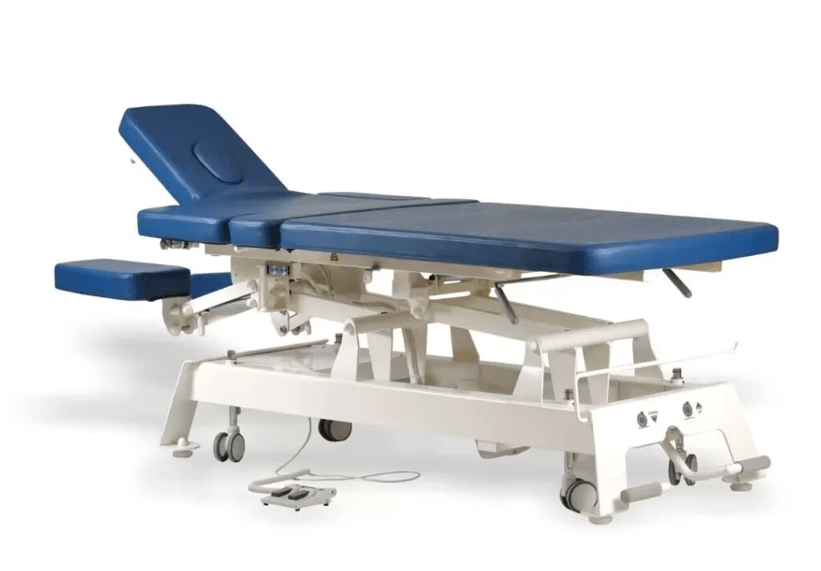
Multi-Section Flexibility Expands What a Clinic Can Offer: Tables that allow independent section adjustment, such as a backrest that raises separately or a leg rest that tilts on its own, support range of motion assessments and treatment protocols that a flat, fixed surface simply cannot accommodate. This is not a cosmetic upgrade. It is the difference between a limited service and a clinic capable of managing a genuinely diverse patient caseload.
The Therapist Advantage Goes Beyond Physical Comfort
Reduced Fatigue Means Better Clinical Focus: When a therapist is not fighting an awkward table position, cognitive load drops. The body stops compensating and starts working with intention. That shift in physical ease translates directly into session quality, which means better palpation, more accurate pressure, and results that experienced patients notice, often without being able to articulate exactly what felt different.
Treatment Consistency Improves When Setup Is Reliable: Therapists working with adjustable tables develop more predictable treatment routines because the equipment cooperates. They know the surface will reach the right height, the backrest will hold, and the patient will be accessible from any angle. That consistency builds practitioner confidence over time and shows up in clinical outcomes that are harder to achieve when equipment remains a constant variable.
What Clinic Owners Often Miss Before Committing to a Table
Before any equipment decision, these are the points that actually matter:
- Motorised height adjustment should operate quietly and without delay, as sudden movement mid-session creates unnecessary patient anxiety.
- Weight capacity ratings need to cover the full range of patients seen in the clinic, not just average estimates, to avoid safety concerns over time.
- Upholstery must be disinfectant-resistant and withstand repeated cleaning without cracking or degrading within the first year of use.
- Section count matters depending on specialisation, with physiotherapy and orthopaedic settings typically benefiting from three or more adjustable sections.
- A minimum height below 55 centimetres ensures safe, unassisted access for patients with limited mobility across a broad age range.
The Workflow Difference Adds Up Across a Full Day
Faster Patient Transitions Reduce Time Between Appointments: Clinics running tight schedules know that time lost between sessions affects daily revenue directly. A height-adjustable table cuts the effort required to position patients safely, reducing reliance on support staff for routine transfers. Across a full working day, those saved minutes accumulate into something genuinely significant for both the team and the clinic’s overall operational output.
Build Quality Defines Whether the Investment Holds Up: A table that performs well on day one but develops mechanical faults within a year is not a worthwhile upgrade. Clinics should treat precision-welded steel frames and powder-coated finishes as baseline requirements, since these construction details determine how well the table holds up under daily clinical use across hundreds of sessions and multiple years.
See also: How to Pursue a Degree in Equine Science and Sports Management
The Details That Separate a Good Table From the Right One
Castor Wheels and Locking Systems Affect Room Flexibility: Tables fitted with quality castors allow clinic spaces to be reconfigured without significant effort. This matters most in multi-use treatment rooms where different therapists or procedure types share the same space. The ability to lock wheels securely during a session is equally critical, because any movement under a patient during active treatment is a safety concern no clinic should accept.
Foot-Switch Control Keeps the Therapist Fully Connected: Perhaps the most underrated feature on a treatment table is foot-operated height control. It allows adjustment without stepping away from the patient, keeps contact maintained during sensitive procedures, and removes the need to pause mid-session. Therapists who use this feature regularly find it genuinely difficult to work with tables that don’t offer it.
Build the Clinic That Patients and Practitioners Both Trust
Upgrading a treatment table is a decision that shows up in every session, every patient interaction, and every end-of-day assessment of how the clinic performed. A well-specified, motorised, adjustable table signals that clinical standards matter and that comfort is part of the process. Clinics ready to make that shift can explore current options from established manufacturers and request a specification or consultation to find the right fit for your setting.