Why Makers Need More Control in Small Workshops
Modern woodworking is no longer limited to large shops or industrial production spaces. Many makers now work from home studios, garages, classrooms, and compact workshops. They want tools that can help them create accurate, repeatable, and visually appealing projects without needing a full factory setup. This is where desktop CNC machines have become especially useful.
A CNC router gives makers more control over cutting, carving, shaping, and engraving. Instead of depending only on hand tools, users can prepare a digital design and let the machine follow programmed paths. This allows them to create clean shapes, detailed patterns, smooth lettering, and consistent results across multiple pieces.
For woodworking and engraving, accuracy matters. A small mistake in depth, spacing, or alignment can affect the entire project. A stable CNC setup helps reduce those mistakes and gives makers a better chance of producing work that looks polished.
For hobbyists, this means more confidence. For small business owners, it means better product quality. For educators and learners, it means a practical way to understand how digital design connects with real materials.
What Makes a CNC Router Useful for Woodworking
A CNC router is designed to remove material using a rotating cutting tool. It can cut outlines, carve patterns, engrave text, drill holes, and shape surfaces. This makes it valuable for a wide range of woodworking tasks.
The strength of CNC woodworking is repeatable precision. Once a design is created and tested, the same file can be used again with consistent results. This is useful when making signs, decorative panels, nameplates, cabinet details, templates, trays, or furniture parts.
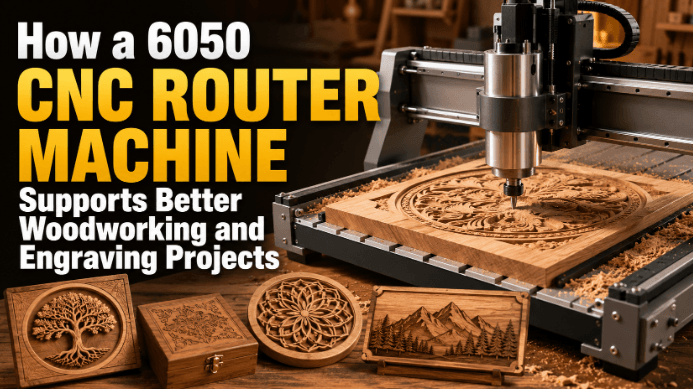
A 6050 CNC router machine can be a practical option for users who want a desktop CNC setup for woodworking, engraving, and detailed DIY projects. The working area and machine structure matter because they affect how comfortably users can handle larger or more detailed pieces.
Woodworking often requires both creativity and accuracy. A CNC router supports both. It does not remove the maker’s role. Instead, it helps the maker turn a carefully planned design into a cleaner physical result.
The Value of a Larger Desktop CNC Work Area
One challenge with compact machines is project size. A very small work area can limit what users are able to create. While small machines are useful for learning, makers often reach a point where they want to produce signs, panels, trays, or decorative pieces that require more space.
A larger desktop CNC work area gives users more flexibility. It allows them to work on wider boards, longer designs, and more practical project sizes. This can be useful for both personal projects and customer orders.
For example, a maker producing small name tags may not need much space. But someone creating a wooden wall sign, a cabinet panel, or an engraved serving tray may need a larger cutting area. Having more room also reduces the need to divide designs into smaller sections.
A larger working area can help with:
- Decorative wooden signs
- Engraved panels
- Custom trays and boards
- Cabinet accents
- Logo plaques
- Templates and jigs
- Small furniture parts
- Larger hobby projects
This flexibility is important because makers often grow beyond their first few simple designs. A machine that supports more project types can remain useful for a longer time.
How CNC Engraving Improves Custom Projects
Engraving is one of the most popular uses for a CNC router. It allows makers to add names, logos, patterns, messages, borders, and decorative details to a material surface. In woodworking, this can turn a plain board into something personal and meaningful.
CNC engraving is different from basic surface marking because the cutting tool physically carves into the material. This creates depth and texture. The result can feel more permanent and dimensional than printed decoration.
Custom engraving is valuable for both creative and commercial work. A small business may offer personalized signs, wedding decor, nameplates, memorial plaques, brand displays, or custom home gifts. A hobbyist may use engraving for family projects, workshop labels, or decorative pieces.
The quality of engraving depends on several factors. The design must be clean, the bit must be suitable, the material must be secured, and the cutting depth must be controlled. When these details are handled properly, CNC engraving can produce sharp and attractive results.
Why Stability Matters in CNC Routing
Stability is one of the most important qualities in any CNC router machine. When a machine moves, cuts, and carves, it must stay steady. If the frame is weak or the material shifts, the final result may show rough edges, uneven lines, or inaccurate cuts.
Woodworking can put pressure on a machine because the cutting bit is physically removing material. Harder woods, deeper cuts, and larger projects can create more resistance. A stable machine helps maintain accuracy during these operations.
Stability also affects surface finish. If the machine vibrates too much, carved lines may look rough. If the tool does not move smoothly, curves and lettering may lose detail. For engraving, even small movement issues can be visible.
Makers should also support stability through proper setup. The machine should sit on a solid surface. The workpiece should be clamped securely. The correct cutting speed and depth should be selected. The right bit should be used for the material.
A stable machine combined with careful preparation gives the best chance of achieving clean results.
Choosing the Right Materials for CNC Projects
Material choice can make or break a CNC woodworking project. Different materials behave differently under a cutting tool. Some cut smoothly, while others may chip, burn, tear, or create rough edges.
Wood is the most common choice for CNC routing, but there are many types to consider. Softwoods are often easier to cut, but they may leave fuzzy edges if the settings are not correct. Hardwoods can produce cleaner detail, but they require sharper tools and more careful cutting. Plywood and MDF are useful for signs, panels, and practice projects, though they also create dust and may require finishing.
For engraving, the surface quality matters. A smooth, flat surface usually produces better lettering and cleaner lines. Warped or uneven material can lead to inconsistent depth.
Before working on an important piece, it is smart to run a test cut on scrap material. This helps users check the depth, speed, bit choice, and overall design. Testing may feel like an extra step, but it often saves time and material in the long run.
Practical Projects for a CNC Router Machine
A CNC router machine can support many types of projects, especially when users understand its strengths. It is not only for advanced professionals. Beginners can start with simple designs and gradually move into more detailed work.
Good beginner projects include small signs, engraved names, simple patterns, coasters, key holders, and basic cutout shapes. These projects help users learn machine movement, tool paths, cutting depth, and material setup.
Intermediate users may explore decorative panels, logo boards, trays, templates, cabinet parts, and layered signs. These projects require more planning but can produce impressive results.
Advanced users may create complex relief carvings, furniture components, product batches, and detailed engraving work. At this stage, the machine becomes part of a larger creative workflow.
The key is to choose projects that match current skill level. A project should be challenging enough to teach something new but not so difficult that it becomes frustrating.
How CNC Supports Small Business Production
Many small businesses use CNC machines because they make customization more practical. Customers often want products that feel personal, such as engraved names, custom logos, unique signs, or special decorative pieces. A CNC router can help produce these items with consistency.
For a small business, repeatability is a major benefit. Once a product design is tested, it can be reused and adjusted. A sign template can be changed with a different name. A logo board can be resized. A decorative pattern can be applied to different products.
This saves time and helps maintain quality. It also allows the business owner to offer more options without completely redesigning every order.
CNC routing can support products such as:
- Personalized wooden signs
- Home decor pieces
- Business logo plaques
- Event and wedding decor
- Custom trays and boards
- Workshop templates
- Branded display items
- Limited product batches
When finished carefully, these items can look professional and hold strong customer appeal.
Read also: How Social Media Technology Influences Society
The Importance of Software and Design Planning
A CNC router depends on good digital preparation. The machine can only follow the instructions it receives. If the design file is messy or the tool path is poorly planned, the final result may not look good.
Design planning includes setting the correct size, checking spacing, choosing the right carving depth, and selecting the proper cutting strategy. A design that looks attractive on screen may still need adjustment before it is ready for machining.
For engraving, small details must be considered carefully. Thin lines may not carve well with a large bit. Small text may become unclear if the depth or tool angle is wrong. Curved shapes may need smooth paths to avoid rough movement.
Good planning reduces mistakes. It also helps users work more efficiently. Instead of guessing during the cut, the maker can prepare the project step by step and understand what the machine will do before it starts.
Safety and Maintenance Should Not Be Ignored
CNC routing involves sharp tools, moving parts, dust, and noise. Beginners should treat safety as part of the process, not as an afterthought. Eye protection, secure clamping, dust control, and careful supervision are important.
Users should never leave the machine running without attention. If the material moves, the bit breaks, or the settings are wrong, problems can happen quickly. Staying nearby allows the user to stop the job if needed.
Maintenance also affects performance. Cutting bits should be kept clean and sharp. Dust should be removed from the work area. Moving parts should be checked regularly. A machine that is maintained properly will usually produce better results and last longer.
Good habits make CNC work safer and more enjoyable. They also help users avoid unnecessary damage to tools, materials, and projects.
Better Results Come From Practice and Patience
A CNC router machine can be powerful, but it still requires learning. The best results come from practice, testing, and steady improvement. Beginners should expect a few imperfect cuts along the way. These mistakes are part of the learning process.
Each project teaches something useful. A rough edge may reveal the need for a sharper bit. Uneven engraving may show that the material was not flat. A poor finish may suggest that the cutting depth was too aggressive. Over time, these lessons build skill.
The real value of a desktop CNC is not only what it can produce today. It is the way it helps makers grow. With each project, users become better at design, setup, material selection, tool choice, and finishing.
For woodworking, engraving, and detailed DIY projects, a reliable CNC router machine can open many creative possibilities. It gives makers a way to work with more precision, produce custom items, and bring digital designs into the physical world with greater confidence.