Introduction
The global manufacturing landscape is undergoing a fundamental shift. Labor costs are rising, consumer expectations for product quality and consistency are higher than ever, and competitive pressure demands faster output with fewer errors. In response, manufacturers across every major industry are accelerating their move away from manual and semi-automated packaging processes toward fully automated form fill seal solutions.
The form fill seal packaging machine once considered a technology reserved for large-scale industrial operations is now accessible to mid-size and even smaller manufacturers. And the reasons driving adoption are compelling, measurable, and growing stronger every year.
This article examines the key forces behind this shift, and why investing in a horizontal form fill seal machine or a broader packaging automation system is increasingly seen not as a luxury, but as a business necessity.
1. Rapidly Rising Labor Costs
Labor is consistently one of the largest operating costs in any packaging operation. Manual packaging lines require significant headcount workers to fill, fold, seal, inspect, and stack products and those costs compound through wages, benefits, training, turnover, and overtime.
In recent years, minimum wage increases, tightening labor markets, and growing worker shortages in manufacturing have made manual packaging increasingly expensive to sustain. Many manufacturers report that packaging labor costs have risen 30–50% over the past five years alone.
An automated packaging machine addresses this directly. A single HFFS machine can replace four to twelve manual packaging workers depending on line configuration — running continuously across multiple shifts with no overtime premiums, no absenteeism, and no training lag.
The return on investment calculation for packaging automation has never been more favorable. For many manufacturers, a modern horizontal form fill seal packaging machine pays for itself within 18 to 36 months purely through labor cost reduction.
2. Demand for Higher Output and Faster Throughput
Consumer demand is growing. Retail channels are expanding. E-commerce fulfillment requires faster pick-pack cycles. In this environment, the speed ceiling of manual packaging has become a hard constraint on business growth.
A skilled manual packaging worker can typically seal and pack 10 to 20 units per minute under ideal conditions. A modern automatic pouch packing machine operates at 60 to 300 packs per minute depending on product type and machine configuration without fatigue, distraction, or performance variation across shifts.
For manufacturers trying to scale production to meet growing orders, the math is straightforward. Adding manual workers to increase throughput is expensive, difficult to manage, and introduces quality variability. Adding capacity through an automated form fill seal machine delivers predictable, scalable output that grows with your business.
3. Consistency and Quality Control
In manual packaging operations, product quality depends heavily on individual worker attention, skill, and fatigue levels. Seal quality varies. Fill weights drift. Labels are occasionally misapplied. These inconsistencies lead to customer complaints, product returns, regulatory scrutiny, and brand damage.
A form fill seal machine eliminates human variability from the packaging process. Every seal is produced at the same temperature, pressure, and dwell time. Every pack receives the same fill quantity. Every label is applied at the same position pack after pack, shift after shift.
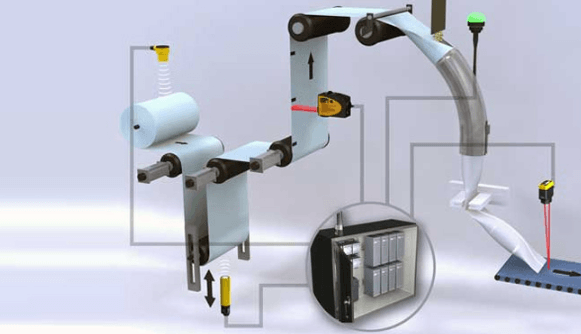
Modern HFFS packaging machines integrate inline quality control systems checkweighers, vision cameras, seal integrity testers, and metal detectors that inspect every single pack and automatically reject any that fall outside specification. This level of consistent quality assurance is simply not achievable in a manual packaging environment.
For manufacturers supplying major retailers, food service chains, or pharmaceutical distributors, consistent packaging quality is not optional. It is a supply contract requirement.
See also: Smart Ways to Buy Rooflights Online for a Brighter Modern Home
4. Stricter Food Safety and Regulatory Compliance
Food safety regulations are tightening globally. The FDA Food Safety Modernization Act (FSMA) in the United States, the EU’s General Food Law, and equivalent frameworks in markets worldwide are placing increasing obligations on manufacturers to demonstrate process control, traceability, and contamination prevention.
Manual packaging introduces multiple contamination risks direct human contact with product or packaging materials, inconsistent hygiene practices, and limited audit trail documentation.
A modern horizontal form fill seal machine addresses these risks systematically:
- Stainless steel, washdown-rated construction minimizes contamination risk and supports hygienic cleaning protocols
- Enclosed product handling reduces airborne and contact contamination
- Digital batch records generated automatically by the machine’s PLC provide the audit trail regulators require
- Modified Atmosphere Packaging (MAP) integration extends shelf life without preservatives, meeting clean-label consumer demands
- Vision inspection and seal integrity systems provide documented evidence of quality control at the point of packaging
For pharmaceutical manufacturers, the compliance case is even more compelling. Automated packaging machines designed for pharma environments meet GMP, FDA 21 CFR Part 11, and EU Annex 11 requirements for electronic records, validation, and process control standards that are effectively impossible to meet with manual processes.
5. Reduction in Material Waste
Packaging film and materials represent a significant cost in any high-volume operation. Manual packaging processes are inherently wasteful film is cut imprecisely, seals are frequently remade, and rejected packs consume both material and labor.
A well-configured HFFS machine dramatically reduces material waste through:
- Servo-driven film tension control that maintains precise film feed with minimal overfeed
- Accurate bag length registration using print mark sensors that ensure cuts land exactly at the correct position every cycle
- Consistent seal quality that reduces seal-related rejects and film waste from rework
- Scrap film rewinders that collect trim waste for disposal or recycling rather than allowing it to accumulate on the production floor
In high-volume operations running millions of packs per month, even a 1–2% reduction in film waste translates into substantial annual cost savings.
6. Labor Shortages and Workforce Reliability
Beyond cost, many manufacturers simply cannot find sufficient workers to staff manual packaging lines. Post-pandemic labor market shifts have left packaging departments chronically understaffed in many regions, forcing manufacturers to operate below capacity, turn down orders, and pay premium wages to retain workers in repetitive, physically demanding roles.
Packaging automation provides a reliable, consistent workforce that is immune to these market pressures. An industrial packaging machine operates on demand available for every shift, every day, without recruitment challenges, HR overhead, or the productivity losses associated with high staff turnover in entry level packaging roles.
For manufacturers planning multi-year production growth, automated form fill seal solutions provide workforce certainty that manual operations cannot.
7. Industry 4.0 and Smart Factory Integration
The broader shift toward Industry 4.0 connected, data-driven manufacturing is accelerating the adoption of automated packaging systems. Modern HFFS packaging machines are no longer standalone pieces of equipment. They are intelligent nodes in a connected production network.
Key Industry 4.0 capabilities now standard on leading packaging automation systems include:
- Real-time OEE monitoring — tracking availability, performance, and quality metrics automatically and reporting to central dashboards
- Predictive maintenance alerts — sensors monitor motor temperatures, vibration levels, and component wear, flagging maintenance needs before breakdowns occur
- Remote diagnostics — machine suppliers can connect directly to the PLC over a secure network connection to diagnose faults and push software updates without an on-site visit
- MES and ERP integration — production data flows automatically into manufacturing execution and enterprise resource planning systems, eliminating manual data entry and enabling real-time production management
- Traceability — every pack produced is linked to a digital record capturing batch number, fill weight, seal parameters, date, time, and operator — essential for recall management and regulatory compliance
Manufacturers that invest in automated form fill seal solutions today are building the data infrastructure that will define competitive advantage in the decade ahead
8. Competitive Pressure and Market Expectations
Perhaps the most powerful driver of all is simple competitive reality. In virtually every manufacturing sector, the businesses that have adopted packaging automation are outcompeting those that have not on price, on speed, on quality, and on their ability to scale.
Retailers and distributors increasingly favor suppliers who can demonstrate consistent quality, high fill accuracy, and reliable delivery performance all of which are outputs of a well-run automated packaging machine operation. Suppliers still relying on manual packaging struggle to meet the consistency and traceability requirements that major buyers now demand as standard.
For manufacturers in developing markets, the window to automate before competitors do is narrowing. The cost of HFFS machines is falling as technology matures and competition among manufacturers increases. The cost of not automating in lost contracts, quality claims, and labor inefficiency is rising.
The Transition: What It Actually Looks Like
Moving to automated form fill seal solutions does not have to mean replacing your entire operation overnight. Many manufacturers follow a phased approach:
Phase 1 — Semi-automation: Replace manual filling and sealing with a mid-range horizontal packaging machine while retaining manual infeed and downstream handling. Immediate labor savings and quality improvement with manageable capital outlay.
Phase 2 — Full line automation: Add upstream conveyors, robotic infeed, inline checkweigher, date coder, and labeler. The HFFS machine becomes the engine of a fully automated packaging line.
Phase 3 — Smart factory integration: Connect the line to SCADA, MES, and ERP systems. Implement predictive maintenance, real-time OEE dashboards, and digital batch records. Full Industry 4.0 capability.
Each phase delivers measurable ROI before the next investment is required making the transition financially manageable for manufacturers of all sizes.
Conclusion
The move toward automated form fill seal solutions is not a trend it is a structural shift in how modern manufacturing operates. Rising labor costs, quality demands, regulatory requirements, labor shortages, and the competitive imperative of Industry 4.0 are all pushing manufacturers in the same direction.
A horizontal form fill seal machine properly selected, integrated, and operated delivers labor savings, quality consistency, regulatory compliance, and production scalability that manual packaging simply cannot match.
Manufacturers who automate today are building the operational foundation for sustainable growth. Those who delay are increasingly finding that the cost of inaction exceeds the cost of investment.
The question for most manufacturers is no longer whether to automate their packaging — it is how fast to make it happen.