Walk through any busy distribution center today and you’ll notice something has changed. Warehouses that once relied almost entirely on manual labour are now filled with conveyors moving products at a steady pace, robots transporting inventory, and software coordinating thousands of daily decisions in the background.
This shift hasn’t happened overnight. Rising labour costs, growing customer expectations, and increasingly complex supply chains have pushed businesses to rethink how their facilities operate. For many companies, warehouse automation is no longer an ambitious future project. It’s becoming a practical investment that helps facilities stay competitive.
Across Canada, distribution centers of all sizes are exploring automation in different ways. Some start with a few conveyors or automated storage systems. Others redesign entire facilities around robotics and smart technologies. The common goal is simple: move products faster, reduce errors, and create operations that can keep up with changing demand.
The Pressure on Modern Distribution Centers
The pace of logistics has changed dramatically over the last decade. E-commerce has raised expectations for next-day and even same-day delivery. Businesses need to process more orders while maintaining accuracy and controlling operating costs.
At the same time, labour shortages continue to affect warehouses across Canada. Finding experienced workers can be difficult, especially during seasonal peaks when demand suddenly increases. Even companies with strong teams often struggle to scale quickly enough to meet changing workloads.
This is where warehouse automation starts to make sense. Automation doesn’t necessarily replace workers. In many facilities, it handles repetitive tasks so employees can focus on activities that require decision-making, quality control, or customer service.
The result is often a warehouse that runs more consistently and can adapt more easily when order volumes fluctuate.
Automation Looks Different for Every Facility
One of the biggest misconceptions is that automation requires a massive investment or a complete rebuild.
In reality, facilities adopt automation in stages.
Some warehouses begin by installing conveyor systems that reduce the time employees spend walking products across the floor. Others introduce automated sortation systems to handle high order volumes more efficiently.
Many companies are also investing in autonomous mobile robots. These machines travel throughout the warehouse, transporting inventory between storage areas and picking stations. Because they can operate alongside people, businesses can add capacity without making major structural changes.
Automated Storage and Retrieval Systems, commonly known as ASRS, are another area experiencing significant growth. These systems maximize vertical space and store products with remarkable precision, making them particularly useful in facilities where floor space is limited.
An experienced warehouse automation company helps determine which technologies fit the operation instead of recommending the same solution for every customer.
Accuracy Matters as Much as Speed
Faster shipping attracts attention, but accuracy is often where automation delivers its biggest benefits.
Manual processes naturally introduce errors. Items get picked incorrectly, labels are misplaced, and inventory counts become inaccurate. Even small mistakes can create delays that affect customers and increase operating costs.
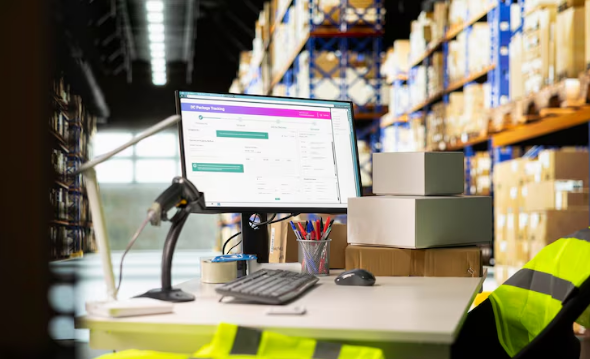
Automation helps reduce these issues by creating standardized processes. Barcode scanning, automated sorting, and software-guided picking systems ensure products move through the warehouse according to predefined workflows.
When inventory information updates in real time, managers gain better visibility into operations. They can identify bottlenecks sooner and make decisions based on accurate data instead of estimates.
This level of consistency becomes especially valuable during busy periods when warehouses are processing thousands of orders every day.
Canadian Warehouses Are Investing for Long-Term Growth
For many businesses, automation isn’t simply about solving current problems. It’s about preparing for future growth.
A warehouse designed for today’s demand may struggle if order volumes double in three years. Expanding manually often means hiring more workers, increasing training costs, and finding additional space.
Automation changes that equation.
Conveyors can be extended. Robotics fleets can grow over time. Storage systems can be designed with future expansion in mind. This flexibility allows companies to scale operations without rebuilding entire facilities every few years.
The planning stage becomes especially important here. Businesses often combine automation projects with facility upgrades or expansions. Working with specialists in design build construction allows companies to coordinate building modifications, electrical systems, structural work, and automation technologies under one strategy instead of managing multiple contractors separately.
This approach tends to reduce project delays and helps ensure new technologies fit naturally within the facility.
Why Systems Integration Is Becoming More Important
Adding equipment is one thing. Making everything work together is another challenge entirely.
Modern warehouses rely on a mix of technologies. Conveyor systems communicate with warehouse management software. Robotics exchange information with inventory systems. Electrical controls coordinate movement throughout the facility.
If these systems don’t integrate properly, businesses may end up with isolated technologies that create more problems than they solve.
This is why companies increasingly seek a warehouse automation systems integrator rather than purchasing equipment from multiple vendors independently.
An integrator looks at the entire operation. They evaluate workflows, software requirements, infrastructure, and long-term business goals before recommending solutions.
The focus isn’t just on installing equipment. It’s about creating an environment where different systems communicate effectively and support each other over time.
That becomes especially important as facilities grow more complex.
See also: Affordable SEO Services for Startups and Small Businesses
Labour Challenges Are Changing Investment Decisions
For years, automation discussions often centered around labour replacement. Today, the conversation is more practical.
Many warehouses simply don’t have enough workers.
Managers are looking for ways to reduce physically demanding tasks, improve workplace safety, and retain experienced employees. Repetitive activities such as transporting inventory or sorting packages are ideal candidates for automation because they can create fatigue and contribute to workplace injuries.
When employees spend less time on physically exhausting work, they can focus on quality control, exception handling, and other responsibilities that require human judgment.
This balance between people and technology is becoming the preferred model for many Canadian facilities.
The goal isn’t to remove people from the operation. It’s to build systems where people and technology complement each other.
The Cost Question Is More Nuanced Than It Used to Be
Businesses often hesitate because automation appears expensive at first glance.
The reality is more complicated.
Yes, some systems require substantial upfront investment. Large ASRS projects or robotics installations can represent major capital expenses.
But companies are increasingly evaluating automation based on long-term operating costs rather than initial purchase prices.
If a system reduces picking errors, improves throughput, lowers labour dependency, and postpones the need for facility expansion, the return on investment can become easier to justify.
Smaller automation projects are also becoming more common. Companies no longer need to automate everything at once.
Many begin with a single process, measure results, and expand gradually.
This phased approach reduces risk while allowing businesses to adapt as their operations evolve.
Choosing the Right Partner Matters
Technology alone doesn’t guarantee success.
Distribution centers are complex environments with unique workflows, space limitations, and operational goals. A solution that works perfectly in an e-commerce fulfillment center may not suit a food manufacturer or a third-party logistics provider.
That’s why selecting the right partner often matters as much as selecting the technology itself.
An experienced warehouse automation company understands warehouse operations, facility infrastructure, electrical requirements, and long-term maintenance needs. They help businesses evaluate options realistically rather than chasing trends that may not deliver meaningful results.
The most successful projects usually start with simple questions.
Where are the bottlenecks?
Which tasks create the most delays?
What areas struggle during peak demand?
Answering these questions often reveals opportunities that businesses hadn’t previously considered.
If you’re exploring automation options or planning upgrades to your distribution center, it’s worth speaking with specialists who understand both infrastructure and operations. Get in Touch With Us to discuss your goals and discover solutions designed around the way your facility actually works.
Across Canada, warehouses are evolving quickly. Facilities that invest thoughtfully in automation aren’t necessarily trying to build the most advanced operation possible. They’re building warehouses that are faster, more adaptable, and better prepared for whatever comes next.
And increasingly, that’s becoming less of an advantage and more of a requirement.